
Step 1: Know your real budget
The price on the windshield is only part of the cost. Before you shop, add up what owning the car will cost each month:
- Purchase price, sales tax, title and registration fees
- Insurance (get quotes on the exact model before buying)
- Gas, based on how many miles you drive each week
- A repair and maintenance fund, even $25 to $50 a week helps
- Loan payment, if you finance
Many financial counselors suggest keeping your total car costs (payment, insurance and gas) well under 15 to 20 percent of your take-home pay. If the numbers do not work, look at affordable car programs or transportation help first.
Step 2: Look in the right places
- Nonprofit car programs sell inspected, repaired cars at fair prices. See your state guide.
- Credit unions often list member-owned and repossessed vehicles and offer fair loans.
- Private sellers can be cheaper than dealers, but you get no warranty and must check the title carefully.
- Franchise dealers may offer certified pre-owned cars with warranties, at higher prices.
- Government surplus auctions (GSA Auctions and state surplus) sell fleet cars as-is.
Be careful with "buy here, pay here" lots. Read our guide to their risks before signing anything.
Step 3: Research the exact car
- Reliability: look up owner reviews and common problems for that model and year.
- Open recalls: enter the 17-digit VIN on NHTSA's recall lookup. Recall repairs are free (see free recall repairs).
- History report: check for accidents, odometer problems and title brands like salvage, rebuilt, flood or lemon.
- Market value: compare prices for the same model, mileage and condition so you know a fair offer.
Step 4: Inspect and test drive
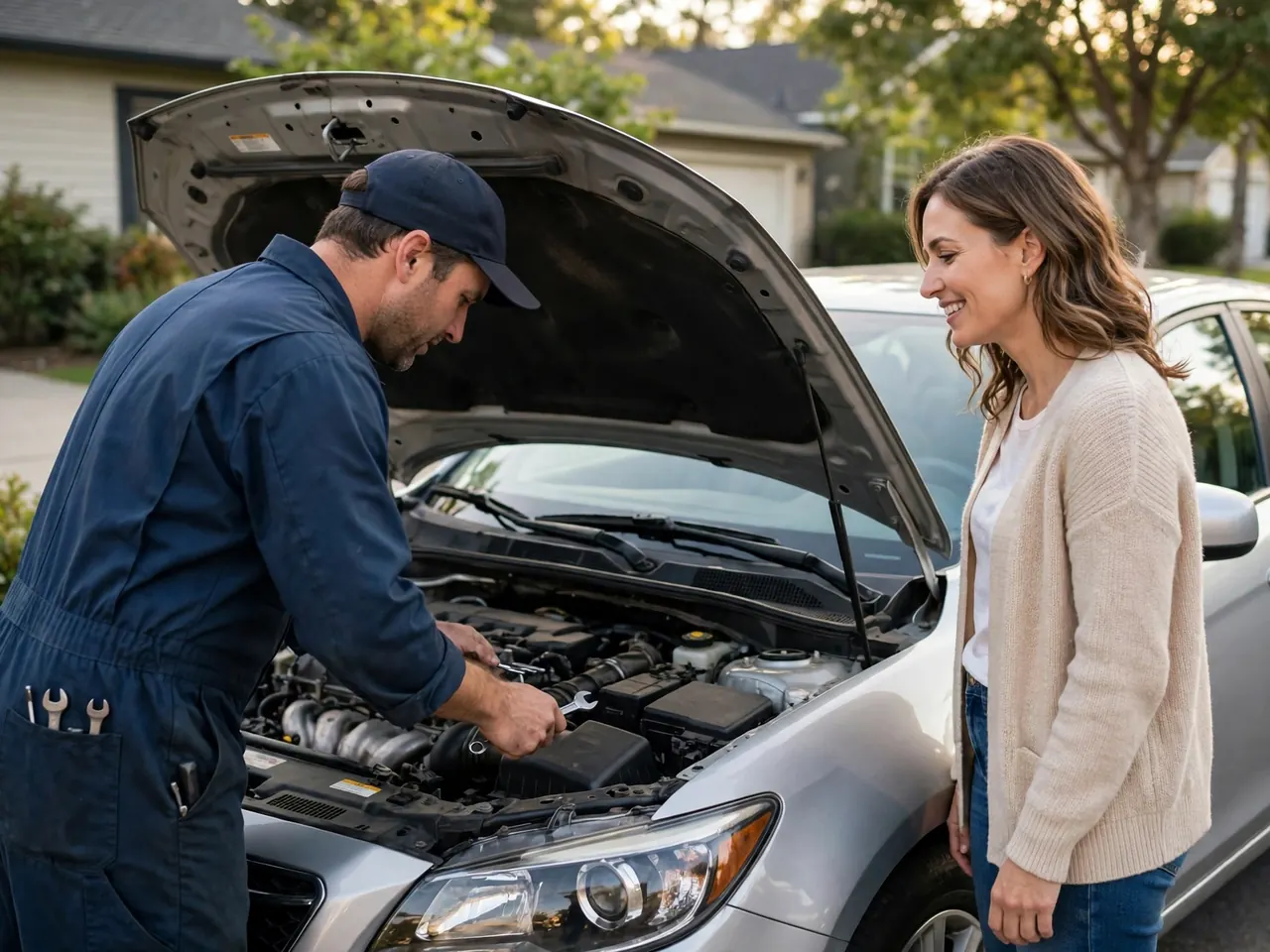
Always have an independent mechanic inspect the car before you pay. A pre-purchase inspection often costs around $100 to $200 and can save you thousands. On your test drive, check:
- Cold start: does it start easily with no smoke or loud knocking?
- Brakes, steering and transmission: smooth, no pulling, slipping or grinding
- Warning lights on the dashboard
- Signs of flood damage: musty smell, rust under seats, water lines
- Tires: even wear and enough tread
Step 5: Paperwork and financing
Dealers must post the FTC Buyers Guide on used cars, which tells you whether the car is sold "as is" or with a warranty. Read it and keep a copy. Make sure the title is in the seller's name and has no liens. There is generally no 3-day cooling-off period for car purchases, so do not sign until you are sure.
Get pre-approved by a credit union or nonprofit lender before you shop, and say no to add-ons you do not need, like overpriced service contracts or GAP products you can buy cheaper elsewhere.
Frequently asked questions
How many miles is too many on a used car?
It depends more on maintenance than mileage. A well-maintained car with 120,000 miles can be a better buy than a neglected one with 60,000. Ask for service records and get an inspection.
Can I return a used car if I change my mind?
Usually not. The FTC's cooling-off rule does not cover cars bought at a dealer's lot, and most used cars are sold as-is. Check the Buyers Guide and your contract before signing.
Is a private seller or a dealer better?
Private sellers are often cheaper, while dealers may offer warranties and financing. Either way, check the title, run a history report and get an independent inspection.
Related help
Find help in your state
- California
- Texas
- Florida
- New York
- Pennsylvania
- Ohio
- Georgia
- North Carolina
- Michigan
- Illinois
- All 50 states + DC
Reviewed November 2026. This page was researched using official government and program sources. Programs change often, so please confirm details with each program before applying. How we research.